
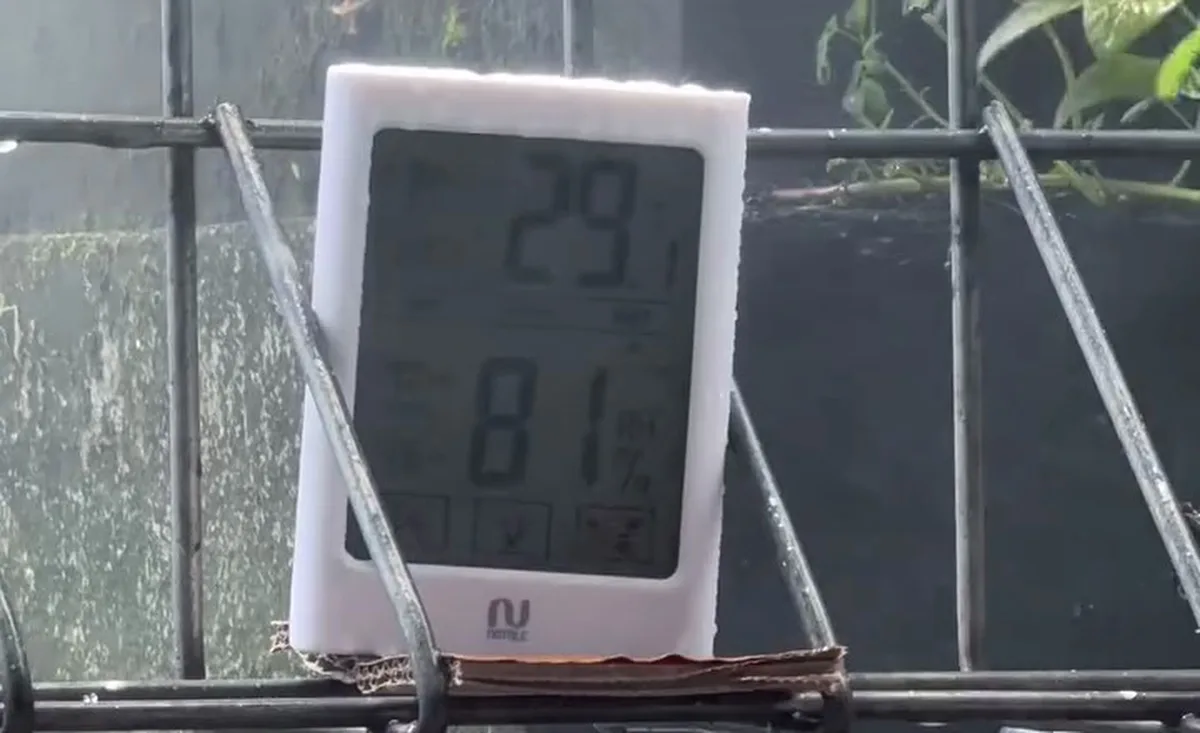
The worst way to run a misting system is to rely on staff memory during the rush. The best way is a system that knows its own schedule: on before guests arrive, following whichever zones are alive, off when nothing needs it.
Here’s the tier-by-tier guide to automated control, from what a small cafe needs to what a factory requires — so you know what to ask for at the survey.
Tier 1: Timers — the schedule that doesn’t forget
The most basic and highest-impact control: the system switches on and off at the hours you set. A lunch venue: 10:30–15:00. An evening rooftop: 15:00–21:00. A mosque: ahead of each prayer time.
The benefit goes beyond convenience: a fixed schedule means predictable electricity costs, water that moves fresh at the same hours every day (a system’s enemy is stagnation, not use), and a 30-second morning check from the staff SOP that verifies rather than operates.
Tier 2: Zones — pay only for the areas that are alive
A multi-zone system runs lines per area instead of everything at once — the capability listed on the mid and large packages. Real usage patterns:
- Restaurants: the main terrace zone all day; the garden zone weekends only.
- Villas: pool deck by day, dining pergola by evening — the classic home multi-zone setup.
- Event venues: daily cooling zones kept separate from visible fog-effect zones for staged moments — one machine, two programs.
- Rest areas and food courts: tenant corridors following each row’s busy hours.
The practical rule: if two areas live on different hours, they deserve to be different zones — exactly the question we map at the survey.
Not sure what fits your space?
Send a photo of the area on WhatsApp — we’ll size the system and send a quote within a day. 600+ installations across Indonesia.
Tier 3: Sensors — when the target isn’t “comfortable” but a number
For hospitality, timers and zones are almost always enough. Sensors enter when the target is a number that must hold:
- Textile and wood humidification: per-zone humidity sensors hold production targets — the system responds to the air, not the clock.
- Barns and livestock: cycles following the herd’s daily heat load.
- Greenhouses: temperature-humidity combinations for the crop — the oldest sensor application in this industry.
The usual honesty: sensors add cost and complexity — for a restaurant terrace they’re overkill; for a factory they’re the only correct way to run. We specify the control tier from the need, not from the catalogue.
The one thing automation doesn’t replace
Timers switch the system on — but the 2–4 week nozzle cleaning, filter checks, and the weekly walk remain human work. Automation removes “forgot to switch it on”, not “forgot to maintain it” — even the most automated system ages according to its owner’s routine.
The short version
Timers for the schedule, zones for areas that live on different hours, sensors for industrial number targets — three tiers chosen from how your venue actually operates. Which one is right for you is a survey question, not a catalogue guess.
Tell us your operating hours and area zones via WhatsApp — we’ll design a control scheme that makes the system follow your venue, not the other way around.
Ready to cool your venue?
Chat on WhatsApp