
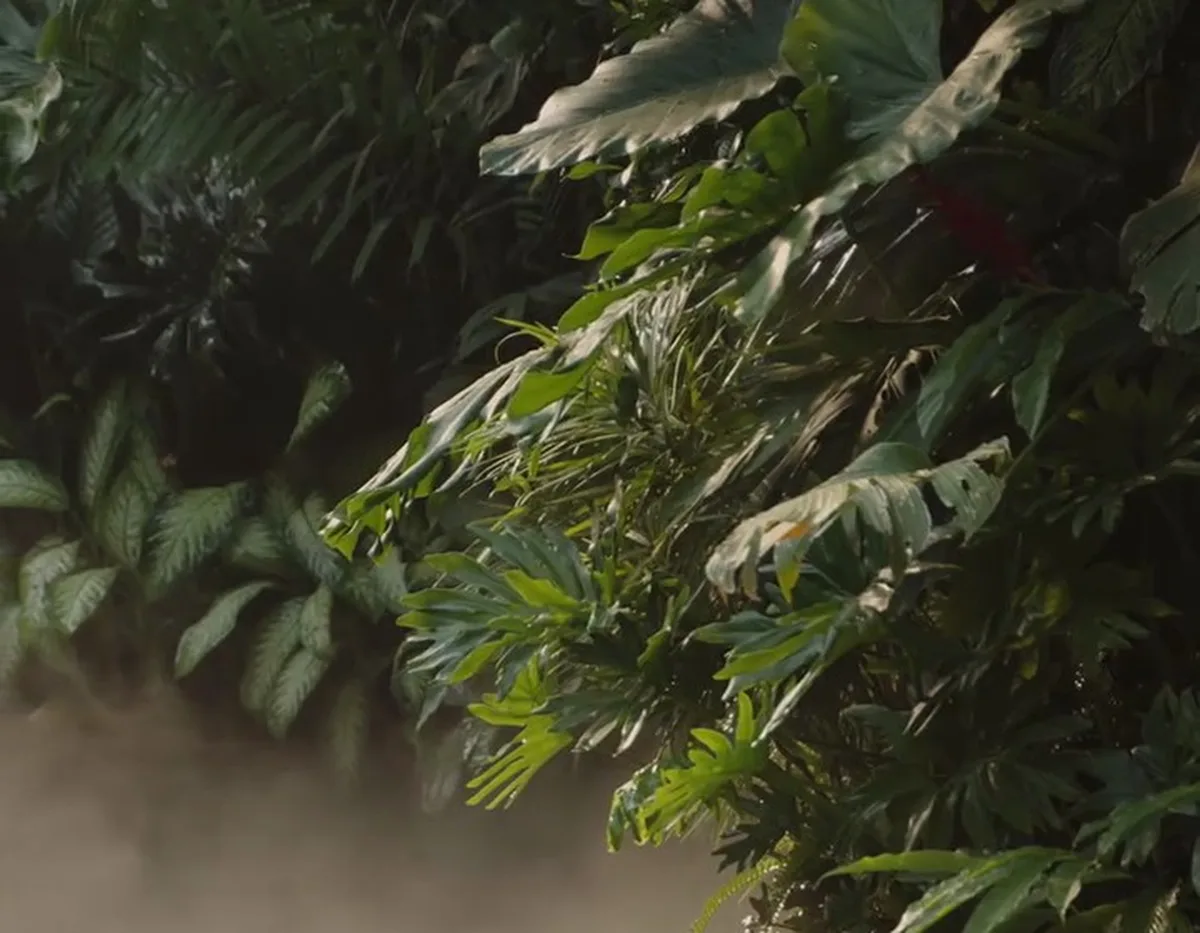
Walk past any big Bali beach club at sunset and you’ll see production value everywhere: lighting rigs, sound, staged moments built for the crowd — and for the phones the crowd is holding. Theme parks and show producers have long used one more tool in that kit: fog. Dense, sculptural, catching the light.
Here’s what most venue owners don’t know: the machine that makes show fog is, at its core, the machine that cools your terrace. High-pressure water mist, staged differently.
Cooling mist vs effect fog: same physics, opposite goals
A cooling system is engineered for invisibility: sub-10-micron droplets, spaced nozzles, evaporation completing before anything is seen or felt as moisture — the mechanics are in how mist cooling works.
Effect fog inverts the goal. Denser nozzle clusters and higher flow deliberately oversaturate a zone of air so the mist lingers and shows — a visible bank of white that drifts, catches sunset light or LEDs, and reads beautifully on camera. Same 70-bar pump, same stainless lines; different nozzle layout, density and control program.
That inversion is why this is a feature of a properly engineered system rather than a separate purchase: zones can be programmed differently, and a venue can run quiet cooling all afternoon, then switch a stage zone or pool edge to visible fog for the sunset set.
Where it earns its keep
- Sunset moments. A fog layer over a pool or along a stage edge at golden hour is the most photographed minute of the venue’s day — content guests generate and post themselves.
- DJ sets and pool parties. Fog plus lighting is the standard language of production; water fog does it without the haze-fluid smell of party fog machines, and doubles as actual cooling for the crowd.
- Weddings and staged scenes. A drifting mist backdrop for ceremonies and photo sessions — the events use case joins the broader events and weddings cooling offer.
- Entrances and reveals. A fog curtain at an entry moment costs nothing extra to run on a system that’s already installed.
This isn’t hypothetical for us: at HOTARU in Jakarta, our system runs dense visible fog over the restaurant’s water feature at night, catching the LED lines exactly the way a stage designer would want.
Not sure what fits your space?
Send a photo of the area on WhatsApp — we’ll size the system and send a quote within a day. 600+ installations across Indonesia.
The honest engineering notes
Three things to know before asking for it:
- Effect zones are designed, not improvised. Deliberately visible fog means deliberately higher local humidity — the zone’s position relative to seating, wind and surfaces is planned so the show happens where it should and the dry zones stay dry.
- Wind is the director. Open-air fog moves with the breeze. Coastal venues get spectacular drift when it’s planned for — and nothing usable when it isn’t. Placement and timing come from the site survey.
- Water quality still rules. Effect nozzles clog by the same mechanism as cooling nozzles — the filtration and maintenance discipline covers both.
What it costs to add
If a venue is installing cooling anyway, effect capability is a design decision inside the same project — extra nozzle density and a control zone, not a second machine. Retrofitting an effect zone onto an existing MistSystem install is likewise a zone extension, quoted per site after a survey. As always: no universal price, because stage length, wind exposure and control needs vary — the cost of ownership breakdown explains what is and isn’t quotable from a distance.
The short version
For mist working as both comfort and atmosphere at a flagship venue, see the W Hotel Bali case.
The 70-bar platform that keeps your tables dry at noon can put a wall of sunset fog over your pool at six. If your venue stages moments — beach club, pool bar, wedding garden — tell us on WhatsApp what you want the crowd to see. We’ll design the cooling zones and the show zones as one system, and tell you honestly what the wind at your site will and won’t allow.
Ready to cool your venue?
Chat on WhatsApp