
Poultry farmers have long known that heat stress is the number-one productivity thief. In dairy cattle the mechanism is the same but the stakes differ: an overheated cow doesn’t just grow slower — she eats less today and gives less milk tomorrow, every single day of the hot season.
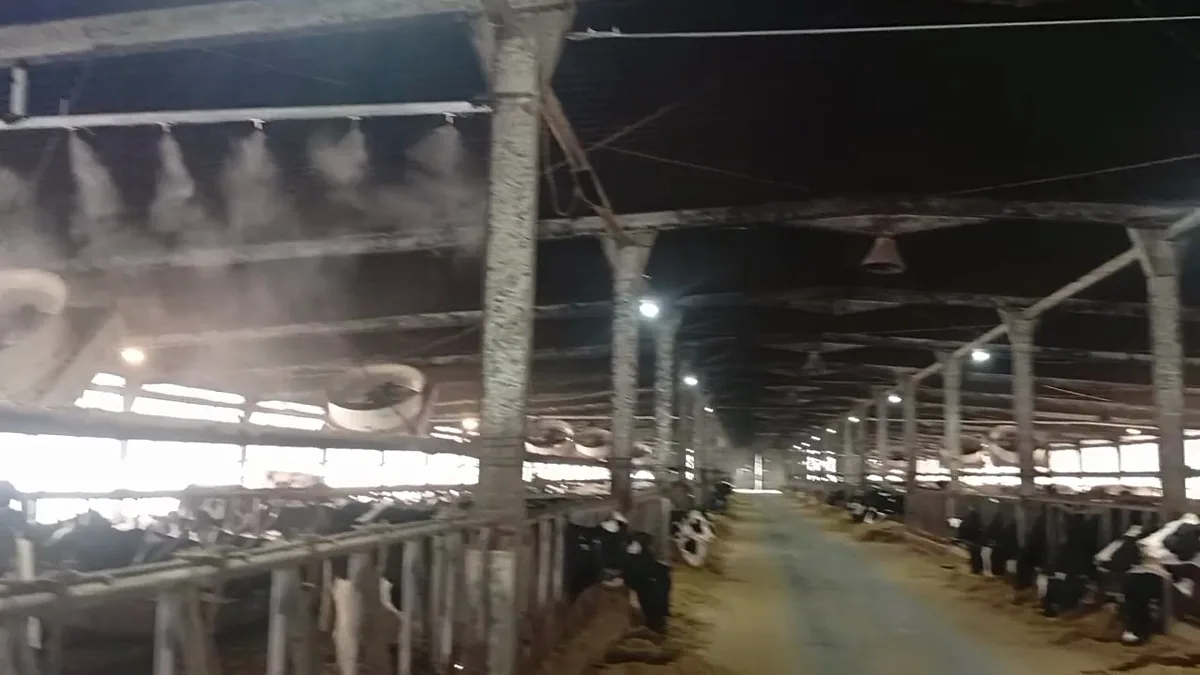
We’ve just completed our largest installation in this sector — a MistPro 700 across PT Greenfields Indonesia’s barns in Malang — and this article distils what makes a dairy barn a special cooling case.
Why cows overheat long before you do
A dairy cow is a metabolic factory: digesting feed and producing milk generates enormous continuous internal heat. Her comfort zone sits far below a human’s — at temperatures a barn worker calls “fine”, the cow is already spending energy shedding heat.
Every farmer knows the signs: rapid breathing, more standing (it exposes more surface for heat loss), bunching in shaded and breezy spots, and the most expensive one — fewer trips to the feed rail. Intake lost today is litres lost tomorrow.
In the tropical lowlands this happens nearly every midday; even in highlands like Malang, the midday hours still bite.
Why a dairy barn can’t be cooled the usual ways
The problem is the same as a warehouse, multiplied by living animals: open-sided structures hundreds of metres long can’t be air-conditioned, and fans alone just move hot air. The farm-specific constraints stack on top:
- Feed lying in open rows must stay dry — damp feed moulds and gets refused.
- Floors must not turn slippery — for a half-tonne animal, a slip is a serious injury.
- Equipment must survive the barn environment — dust, ammonia, routine washdowns.
Coarse sprayers fail all three at once. Sub-10-micron droplets evaporate in the barn air — cooling the zone without wetting feed, floors, or the animals.
Planning cooling for your farm?
Send a photo or video of the barn on WhatsApp — we’ll size the system for your headcount and send a quote within a day.
What Greenfields taught us
The Malang installation — a MistPro 700 covering 500 m² of barn zones — confirmed patterns that apply at any scale:
- Cool the feed rows first. Cows spend the hottest hours at the rail — or don’t, and that’s the whole problem. Mist lines above the feeding rows keep the herd eating through midday.
- Lines follow the existing roof frame — out of reach of animals and washing equipment.
- Farm water dictates filtration. Industrial volumes on well water mean filtration is a requirement, not an option.
- Barn staff run the system themselves after training — the same rhythm as a venue SOP, folded into existing barn routines.
Photos and footage from the installation are in the case study.
For farms of other sizes
The zoning principle scales down: a hundreds-head farm cools the feed rows and the milking waiting yard; a tens-head operation can start with a single feed-rail zone. What never changes: absolute dryness, serious filtration, and routine — the same three things that decide a system’s lifespan anywhere.
The short version
Dairy cows pay for heat in milk, daily and silently. High-pressure mist drops the feed-zone temperature without wetting feed or floors — proven at our largest agricultural installation, at one of Indonesia’s biggest dairy producers.
Running a dairy or feedlot operation? Send barn photos, herd size, and your city via WhatsApp — we’ll survey and design zones around your feed rows and roof structure.
Ready to cool your venue?
Chat on WhatsApp