
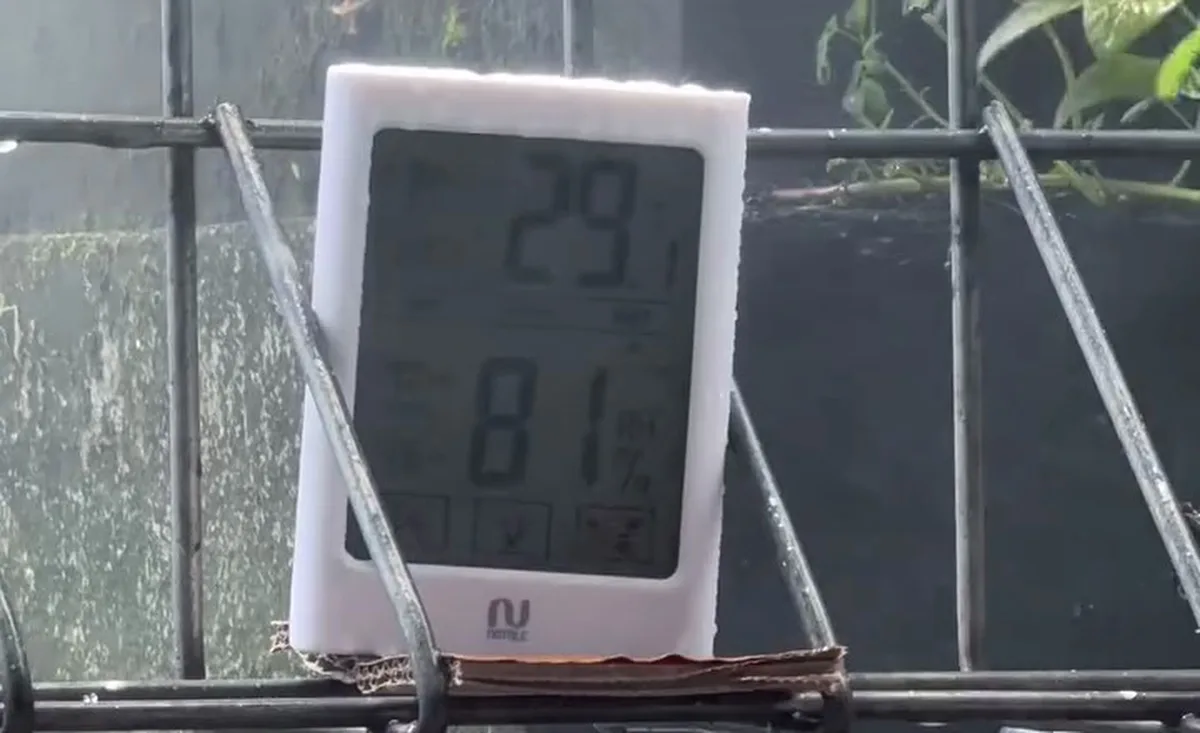
In textiles, humidity isn’t a comfort setting — it’s a production parameter. Cotton, rayon and their blends are hygroscopic: their moisture content follows the air around them. When the production hall runs too dry, fibres give up their water, turn brittle, and every downstream process pays for it.
Here’s why textile mills worldwide invest in humidification — and how a high-pressure mist platform does it without wetting anything.
What happens on a dry production floor
Yarn breaks more often. Dry fibres lose elasticity. At modern machine speeds, brittle yarn means more breaks — and every break means a stopped machine, an operator re-piecing, and lost output.
Static builds up. Friction between dry fibres generates charge that makes fibres repel each other, yarn go “hairy”, fabric cling to rollers — and occasionally bites the operators. Adequate humidity lets charge drain away instead of accumulating.
Fibre dust floats. Dry air keeps fine lint airborne — a workplace air-quality problem and a material loss at once. The same principle as mist dust suppression applies here: droplets bind floating fibres.
Sellable weight evaporates. Hygroscopic fibres are traded at standard moisture content. A dry warehouse and production hall are, quite literally, evaporating your product’s weight.
Why high-pressure mist, not ordinary sprayers
The requirement is as strict as a restaurant’s guest area: humidity must rise without a single droplet landing on fabric, machines or floors. Landed water means stains, rust and slippery floors — worse than dry air.
This is where the physics of sub-10-micron droplets decides: at 70 bar, mist evaporates in the air and becomes humidity — not water spots. It’s the same platform that cools our 600+ hospitality venues; what changes is the goal: the system runs on humidity sensors instead of temperature, with zones designed around the machine layout.
The tropical-climate bonus: the same evaporation drops the hall temperature by a few degrees — in a hot production space, not a bad side effect.
Not sure what fits your space?
Send a photo of the area on WhatsApp — we’ll size the system and send a quote within a day. 600+ installations across Indonesia.
What shapes the system design in a mill
- Humidity targets per process. Spinning, weaving and storage each want different levels — a multi-zone system with per-zone sensors, not one setting for the whole building.
- Water quality. Industrial volumes run far beyond a hospitality venue, so filtration follows the water test — here it’s a requirement, not an option.
- Integration with ventilation. Factory airflow moves humidity around; the zone design works with it rather than against it.
Industrial installations are quoted per site after a review — like our factory and warehouse work, from PT Greenfields’ dairy plant in Malang to a Madiun warehouse.
The short version
A dry textile floor pays through yarn breaks, static, fibre dust and evaporating sellable weight. High-pressure mist raises humidity to target without wetting fabric or machines — the same platform as hospitality, sensor-driven, designed per process.
Running textile or garment production? Send the hall size, main processes and your city via WhatsApp — we’ll review the site and give you a zone design with a realistic range.
Ready to cool your venue?
Chat on WhatsApp