
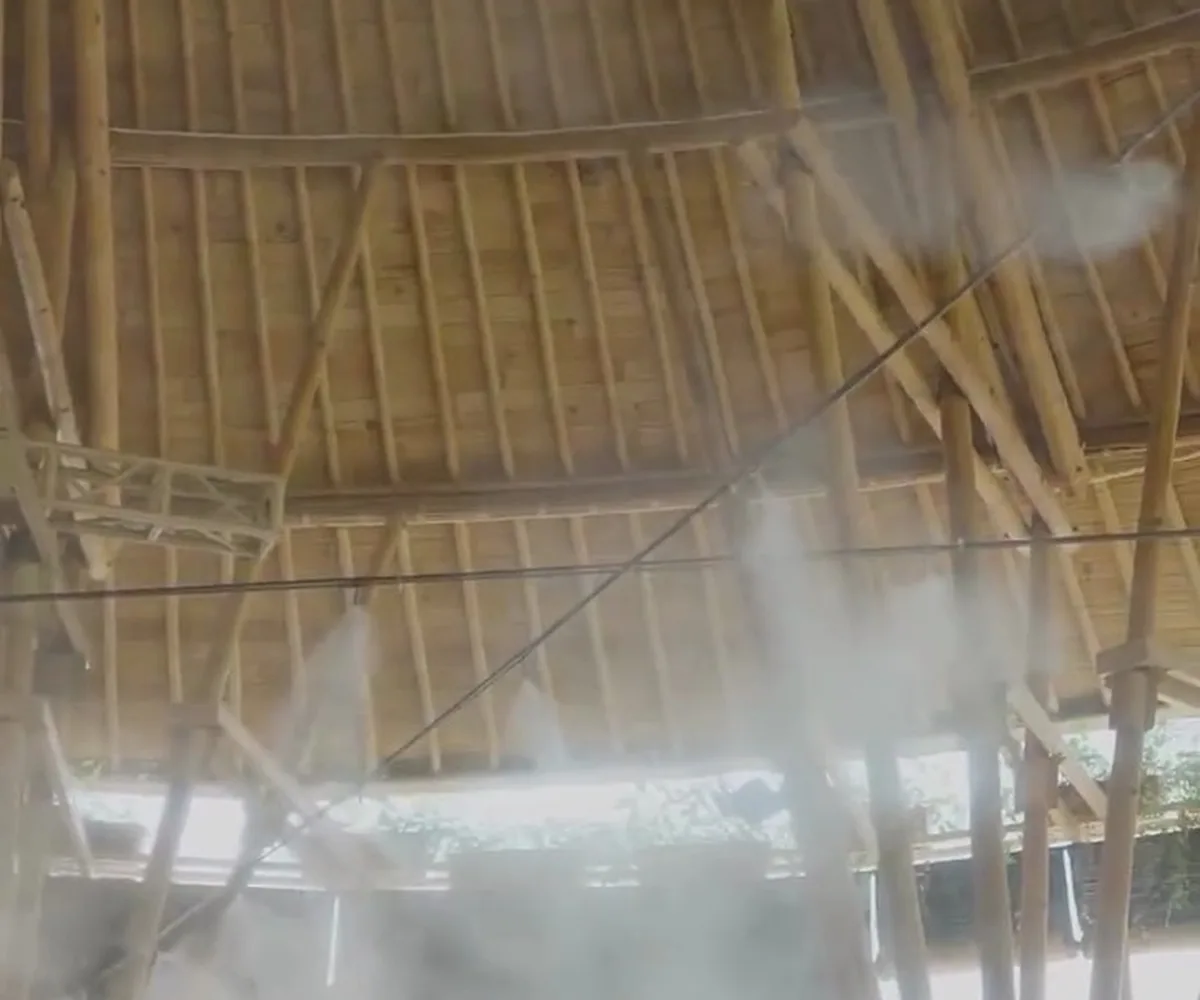
In American sports, mist is old news: providers there have spent decades cooling NFL sidelines, deploying misting fans at the US Open, and misting stadium stands. The reason is simple — athletes are walking heat engines, and the recovery minutes on the sideline decide the next period’s performance.
Indonesia stages its sport in a climate harsher than any American summer — and we’ve already started from this side: a golf course in Balikpapan and padel in Banjarmasin. Here’s the full map of where mist works in sport.
The players’ bench: the recovery minutes that decide
A player coming off the field has a few minutes to bring core temperature down before going back in. A mist zone at the bench accelerates exactly that — faster sweat evaporation plus cooler air, without wetting jerseys or equipment. It’s the smallest and highest-impact zone in the whole stadium: a few metres of line for the club’s most expensive assets.
The stands: spectators paying to sit in the sun
Open stands at midday are the queue case at scale: people sitting still in fixed positions, unable to move, for hours. Mist lines on the stand canopies cool block by block — and for a stadium operator, stand comfort is what keeps daytime ticket prices defensible.
Not sure what fits your space?
Send a photo of the area on WhatsApp — we’ll size the system and send a quote within a day. 600+ installations across Indonesia.
Running events: finish zones and water stations
Mass running is booming in Indonesia, and heat is its main risk — runners hit the finish line with core temperature at its peak. A mist zone after the finish helps thousands cool down in a moving queue; mist gates at water stations do the same mid-route. For organisers this is the classic rent-or-install case: an annual event at changing locations — rent; a permanent running venue — install.
Tournaments and training venues
Semi-open badminton academies, roofed futsal courts, outdoor climbing venues — all follow the gym logic: high internal athlete heat load, floors and grips that must stay bone dry, zero noise because coaches are calling instructions. Sub-10-micron droplets satisfy all three at once.
The technical honesty for playing surfaces
- Playing surfaces are never misted directly — grass has its own irrigation regime, hard courts must stay dry for grip. Mist works the perimeter: benches, stands, player tunnels, warm-up zones.
- Stadium wind is a design factor — large structures create wind corridors; line placement follows them, never fights them.
- Scale is no obstacle: we’ve already handled airport flow — stands are the same case with seats.
The short version
Mist in sport isn’t an experiment — in the world’s big leagues it’s standard kit. For Indonesia the zone map reads: players’ benches (small and highest-impact), stands (paid comfort), running-event finish zones (safety for thousands), and semi-open training venues. We’ve started with golf and padel — this list is the natural continuation.
Running a stadium, an academy, or a race? Send the venue layout or route, the approximate zones, and your city via WhatsApp — we’ll design from the highest-impact zone first.
Ready to cool your venue?
Chat on WhatsApp