
Cooling for Schools: Assemblies, Open Canteens, and Play Areas Out of the Scorching Heat
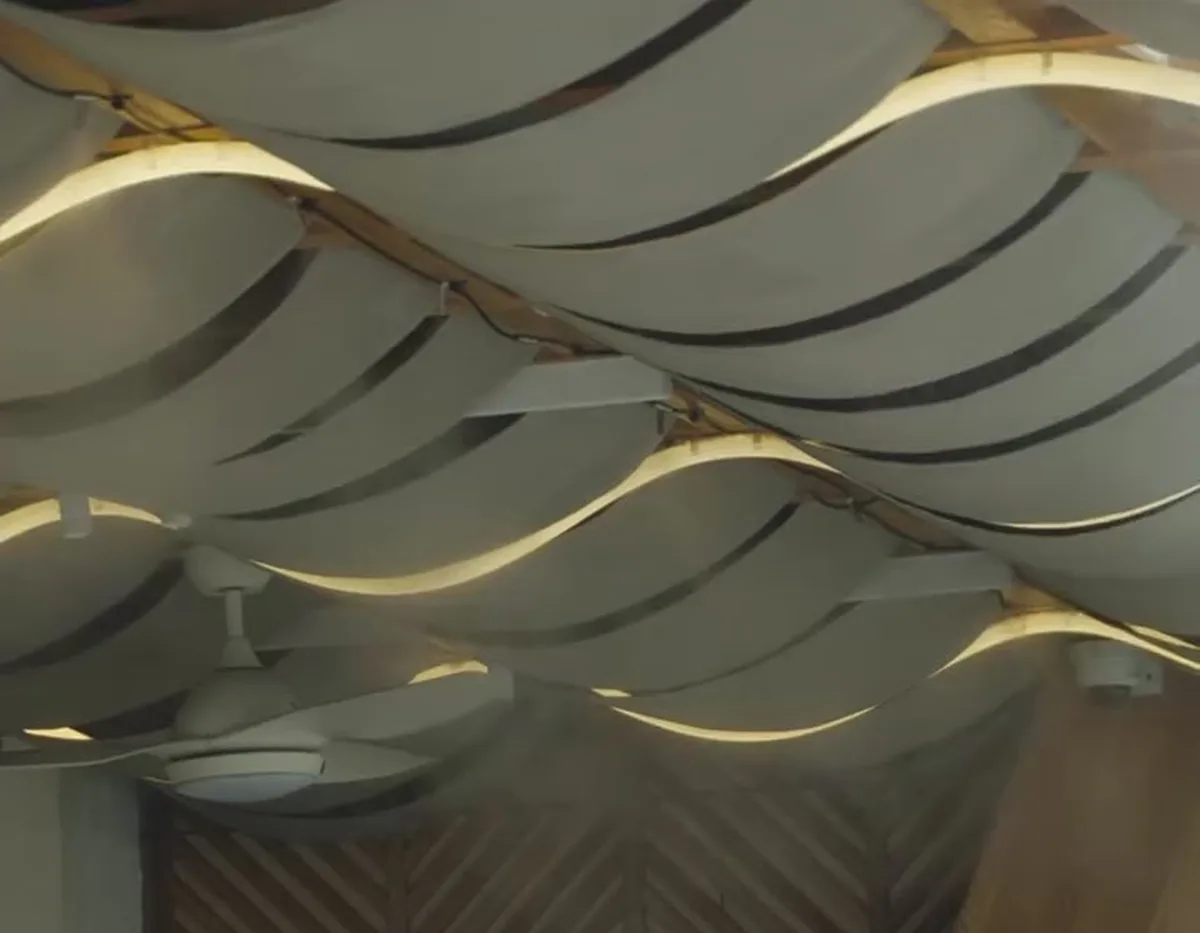
A school schedule doesn’t negotiate with the sun: assembly stays on Monday morning, recess stays at 10 and 12, extracurriculars stay in the afternoon. What can change isn’t the schedule — it’s the temperature of the places the schedule runs through.
We’ve installed in an educational setting — SMA Islam Plus Adzkia in Medan — and this article distils where mist cooling makes the most sense at a school, plus its honest limits.
Why schools are a serious case
Children handle heat worse than adults. Small bodies absorb heat faster, and a child absorbed in play doesn’t pause to “feel hot” — they keep going until they’re drained. Teachers know the pattern: the first lesson after a hot recess runs on near-zero concentration.
Schools are fullest exactly during the hot hours. Unlike a restaurant that can run quiet at midday, a school operates at full capacity from 7 am to 3 pm — precisely spanning the temperature peak.
The areas are outdoor by design. Assembly grounds, walkways between buildings, semi-open canteens, pickup waiting areas — Indonesian schools are built open, and rightly so for ventilation. The cooling has to work with that openness, not against it — the same reason AC fails in open spaces.
The school zones where it counts most
- Canopies and walkways — lines on existing frames, cooling the routes between classes and the gathering spots at recess.
- Open canteens — lunch hours are the hottest hours; the logic mirrors a food court.
- Field edges and assembly waiting zones — misted shade where rows can recover before and after; the open field itself is honestly impractical to mist (the same reason as an open lawn).
- Pickup areas — parents wait there daily at the harshest hour.
Safety — the question every school must ask, with a calm answer: the mist is clean water with no additives, floors stay dry (droplets evaporate mid-air), there are no blades, no electricity in student areas, and the lines mount high out of reach. The full risk-by-risk answer is in is mist cooling safe.
Not sure what fits your space?
Send a photo of the area on WhatsApp — we’ll size the system and send a quote within a day. 600+ installations across Indonesia.
Honest limits for a school budget
Schools aren’t commercial venues — budgets come from foundations or committees, and we respect that with an honest ordering:
- Start with shade. Canopies and trees are the first investment; mist is the second step that makes the shade genuinely cool.
- One zone first. The canteen OR the main walkway — whichever carries the longest occupied hours. The smallest machine covers one secondary-school zone comfortably.
- Running costs stay light: Rp 2,000–5,000 of electricity per school day, with maintenance your own staff can run — a fit for foundation budget models.
The short version
Schools operate exactly through the hottest hours, in areas that are open by design, with the occupants most vulnerable to heat. High-pressure mist cools canopies, canteens and waiting areas without wetting anything and without noise — proven at our Medan installation, and affordable through a one-zone-first approach.
Running a school or foundation? Send photos of the areas, approximate sizes, and your city via WhatsApp — we survey within 48 hours and prepare a per-zone proposal you can take to the committee meeting.
Ready to cool your venue?
Chat on WhatsApp