
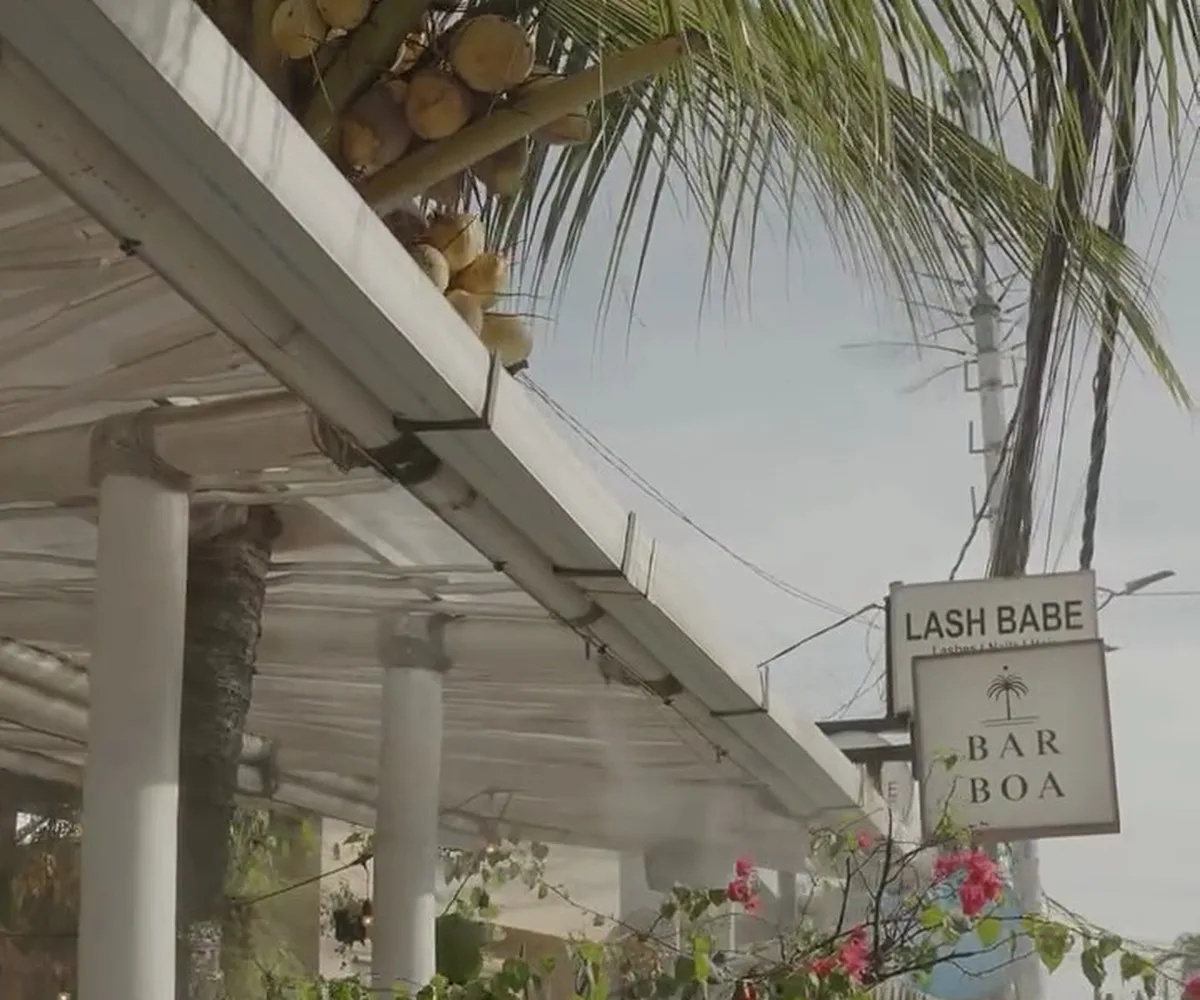
Container cafes, three-table coffee spots, food-street kiosks — the micro format is blooming across Indonesia because the capital maths works. But per square metre, it’s also the hottest format there is: a steel container is a nicely painted oven, the seating is fully open, and the espresso machine plus fridges add heat from inside.
Here’s the honest guide by scale — because in the micro format the right answer often isn’t an installed system, and we’ll tell you exactly when.
Why a container runs hotter than a normal building
Steel absorbs solar radiation and conducts it inward almost unimpeded — by midday a container wall can be too hot to touch, and the whole box radiates that heat into the seating area beside it until evening. Add the compact kitchen bolted on, and your 15 m² of seating is besieged by heat from three directions.
The first priority therefore isn’t mist — it’s the sun: shade on the container’s west face and a roof over the seating change the equation more than any device — the same ordering as all our guides.
Solutions by scale, honestly
One kiosk, 2–3 tables: a misting fan is the right answer. One unit covers an area that small, and an installed system isn’t justified yet — we’re consistent about this everywhere.
A container cafe with 4–6 tables that fills every midday: this is the interesting grey zone. One short line off the smallest machine covers the whole seating area, tables stay dry (critical: the micro format lives on laptops and phones on tables), and there’s no fan noise in a space that small. The maths resembles a home terrace — and the system often wins precisely because the area is small.
A kiosk row / food street / container park: here the micro format flips into a big case. Five kiosks each buying fans means the cable, tank and noise problems multiplied by five. One machine with a line along the row — shared by tenants or installed by the operator — cools the shared visitor corridor, exactly the queue-zone logic: narrow, elongated, busy.
Not sure what fits your space?
Send a photo of the area on WhatsApp — we’ll size the system and send a quote within a day. 600+ installations across Indonesia.
Micro-format specifics
- Kitchen heat is real at this scale. Mist zones are positioned for the seating; kitchen ventilation stays the exhaust’s job — mist is not a ventilation substitute.
- Mounting structure is often minimal — and the container actually helps: its steel walls are ready-made mounting rails for a light line.
- Power is limited at small kiosks: the small pump draws Rp 2,000–5,000 per day — far below one extra fridge.
- Short land lease? Lines come off without damage — relevant for container parks on yearly contracts.
The short version
The micro format heats up fastest and has the most valuable margin per table. One kiosk — a fan; a container that fills every midday — a short line off the smallest machine; a kiosk row — one shared system for the corridor. And before any of it: shade on the west face.
Running a container cafe or a kiosk row? Send photos, the table count, and your city via WhatsApp — we’ll tell you honestly which side of the scale you’re on, including when the answer is “buy one fan and sleep well”.
Ready to cool your venue?
Chat on WhatsApp