
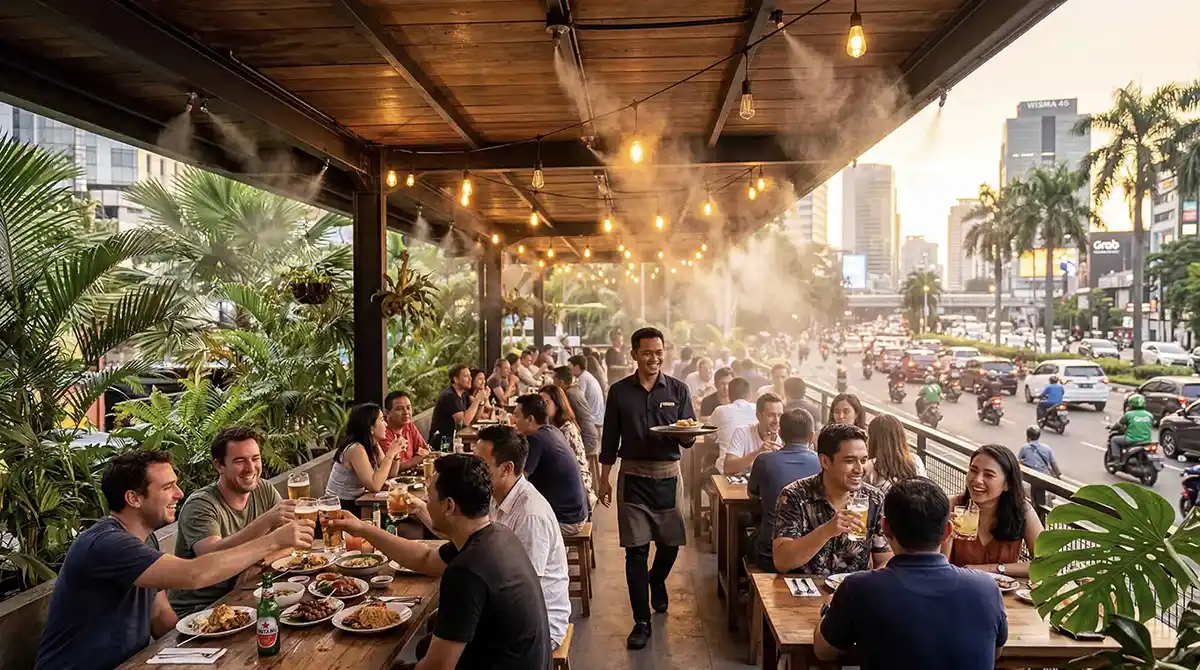
Bali’s cafe scene is one of the most competitive in Southeast Asia — and one of the most profitable when done right. Canggu alone has seen dozens of new cafes open every year, catering to a steady stream of digital nomads, tourists, and a growing local middle class willing to spend on quality coffee and food.
But competition also means the margin for error is thin. The number one reason cafes fail in Bali is not bad coffee or a weak concept. It is running out of money before finding an audience. Underestimating startup costs, forgetting about permit timelines, or skipping a working capital buffer can turn a dream opening into a six-month scramble.
This guide breaks down every major cost category with realistic 2026 price ranges in IDR, based on current market data from Canggu, Seminyak, and Ubud. Whether you are an Indonesian entrepreneur or a foreigner setting up through a PT PMA, these numbers will help you build a budget you can actually trust.
1. Location and Rent
Rent is typically your largest single expense, and it varies dramatically by area. Most commercial leases in Bali require a minimum 2-year commitment, with 1-2 years paid upfront as a deposit.
| Area | Typical Annual Rent (IDR) | Notes |
|---|---|---|
| Canggu (main road) | Rp 150-350M/year | Highest foot traffic, highest competition |
| Canggu (side street) | Rp 80-150M/year | Lower visibility, lower cost |
| Seminyak | Rp 100-250M/year | Premium tourist area, strong evening traffic |
| Ubud | Rp 50-200M/year | Wide range depending on proximity to center |
| Uluwatu / Pererenan | Rp 60-120M/year | Emerging areas, growing rapidly |
Expect to pay 1-2 years of rent upfront as a deposit. For a mid-range Canggu location, that means Rp 200-400M locked up in your lease before you pour a single espresso.
Budget allocation: Rp 100-400M (first year rent plus deposit)
2. Renovation and Interior Design
Renovation costs depend on whether you are working with a bare shell or taking over an existing cafe space. A turnkey takeover with minor rebranding will cost a fraction of a full build-out.
| Scope | Cost per sqm (IDR) | 100 sqm Total |
|---|---|---|
| Basic fit-out (paint, lighting, counter) | Rp 3-5M/sqm | Rp 30-50M |
| Mid-range (custom interior, flooring, plumbing) | Rp 5-10M/sqm | Rp 50-100M |
| Premium (architect-designed, imported materials) | Rp 10-20M/sqm | Rp 100-200M |
Most successful cafes in Bali land somewhere in the mid-range. Instagram-worthy interiors matter here — they are part of your marketing. But you do not need imported Italian tiles to get there.
Budget allocation: Rp 50-200M
Not sure what fits your space?
Send a photo of the area on WhatsApp — we’ll size the system and send a quote within a day. 600+ installations across Indonesia.
3. Kitchen Equipment
Your kitchen setup depends on your menu scope. A coffee-focused cafe with simple food needs far less than a full brunch restaurant.
| Item | Cost Range (IDR) |
|---|---|
| Commercial espresso machine (2-group) | Rp 30-120M |
| Grinder (commercial grade) | Rp 8-25M |
| Commercial refrigerator | Rp 10-25M |
| Oven / convection oven | Rp 8-20M |
| Ice machine | Rp 5-15M |
| Prep tables, sinks, shelving | Rp 10-20M |
| Blenders, small equipment | Rp 5-10M |
| POS system | Rp 3-8M |
A quality two-group espresso machine is the single biggest equipment decision. You can start with a reliable mid-range machine (Rp 30-50M) and upgrade later, or invest in a premium brand like La Marzocco from the start (Rp 80-120M). Buy the best grinder your budget allows — it affects cup quality more than most people realize.
Budget allocation: Rp 80-200M
4. Furniture and Decor
Indoor and outdoor seating, tables, bar stools, decorative elements, signage. Bali has excellent local furniture makers, which keeps costs reasonable compared to Western markets.
| Item | Cost Range (IDR) |
|---|---|
| Indoor tables and chairs (20-30 seats) | Rp 15-40M |
| Outdoor furniture (10-20 seats) | Rp 10-30M |
| Bar counter and stools | Rp 8-20M |
| Lighting fixtures | Rp 5-15M |
| Signage and branding elements | Rp 3-10M |
| Plants and decoration | Rp 3-8M |
Budget allocation: Rp 40-120M
5. Outdoor Infrastructure
If your venue has a terrace or garden area — and in Bali, it should — you need to budget for making that space usable year-round. Outdoor seating is often the main draw, but Bali’s midday sun and heat empty terraces fast without proper infrastructure.
| Item | Cost Range (IDR) |
|---|---|
| Canopy, pergola, or shade structure | Rp 15-50M |
| Outdoor lighting (string lights, spots) | Rp 5-15M |
| Outdoor cooling system | Rp 12-25M |
| Fans (industrial / decorative) | Rp 3-8M |
| Landscaping and drainage | Rp 5-15M |
Outdoor cooling deserves specific mention. A mist cooling system (Rp 12-25M depending on terrace size) is essential for venues with outdoor seating — Bali’s midday heat will empty your terrace without it, and that is lost revenue every single afternoon. The ROI pays for itself within months in retained covers. If you are weighing cheaper marketplace misting fans first, the honest trade-offs are in misting fans for cafes, and the full running-cost picture in total cost of ownership.
Budget allocation: Rp 30-100M
6. Licenses and Permits
The licensing path depends on your ownership structure. Foreign-owned businesses must operate through a PT PMA, which adds significant upfront cost. Indonesian-owned businesses (PT or CV) have a simpler and cheaper process.
| Item | Cost Range (IDR) | Notes |
|---|---|---|
| PT PMA setup (foreign owners) | Rp 25-60M | Includes notary, OSS registration |
| PT setup (Indonesian owners) | Rp 5-15M | Simpler process |
| NIB (Business Identification Number) | Rp 1-3M | Required for all businesses |
| TDUP (Tourism Business License) | Rp 3-8M | For F&B serving tourists |
| Health and sanitation permits | Rp 2-5M | Food handling certification |
| Building permit / SLF | Rp 3-10M | If renovating structure |
| Alcohol license (if applicable) | Rp 5-15M | Required to serve alcohol |
Timeline matters here. Expect the full licensing process to take 4-8 weeks. Factor this into your rent start date — you will be paying rent while waiting for permits.
Budget allocation: Rp 15-80M (depending on ownership structure)
7. Initial Inventory and Supplies
Your opening inventory covers everything from coffee beans to napkins. Plan for at least one month of supplies at projected volume.
| Item | Cost Range (IDR) |
|---|---|
| Coffee beans (first month) | Rp 3-8M |
| Food ingredients and supplies | Rp 5-15M |
| Packaging (cups, takeaway containers) | Rp 3-8M |
| Cleaning supplies | Rp 1-3M |
| Tableware (plates, glasses, cutlery) | Rp 5-15M |
Budget allocation: Rp 15-45M
8. Staff (First 3 Months)
Plan to fund at least 3 months of salaries before expecting the business to cover payroll from revenue. The 2026 UMK (minimum wage) for Badung Regency is Rp 3.79M/month, with sectoral rates for food and beverage slightly higher.
| Role | Monthly Salary (IDR) | Typical Count |
|---|---|---|
| Head barista | Rp 5-8M | 1 |
| Barista | Rp 3.8-5M | 2-3 |
| Cook / kitchen staff | Rp 4-6M | 1-2 |
| Server | Rp 3.8-4.5M | 2-3 |
| Dishwasher / helper | Rp 3.5-4M | 1 |
| Manager (if not owner-operated) | Rp 7-12M | 0-1 |
For a small cafe with 5-6 staff, expect a monthly payroll of Rp 20-30M. For three months of buffer, that is Rp 60-90M. Do not forget to include training costs before opening — your team needs to nail the menu and service before day one.
Budget allocation: Rp 60-120M (3 months)
9. Marketing and Launch
A strong opening generates momentum that carries you through the critical first months. Budget for both pre-launch and ongoing marketing.
| Item | Cost Range (IDR) |
|---|---|
| Brand identity and logo design | Rp 5-15M |
| Website and Google Business Profile setup | Rp 3-10M |
| Social media content (photo/video shoot) | Rp 5-15M |
| Influencer partnerships (soft opening) | Rp 5-20M |
| Grand opening event | Rp 5-15M |
| Meta / Google Ads (first 2 months) | Rp 5-15M |
In Bali, Instagram and TikTok are your most effective marketing channels. A professional photo shoot of your space and menu is not optional — it is infrastructure. Budget for it like you would budget for tables.
Budget allocation: Rp 25-80M
10. Working Capital Reserve
This is the budget line most first-time cafe owners skip, and it is the one that keeps you alive. Even a well-located cafe with a strong concept typically takes 3-6 months to reach break-even. You need cash to cover rent, salaries, supplies, and unexpected costs during that ramp-up period.
Rule of thumb: set aside 3-6 months of total monthly operating costs as a reserve.
| Monthly Operating Cost | 3-Month Reserve | 6-Month Reserve |
|---|---|---|
| Rp 40-60M/month (small cafe) | Rp 120-180M | Rp 240-360M |
| Rp 60-100M/month (medium cafe) | Rp 180-300M | Rp 360-600M |
Budget allocation: Rp 120-400M
Total Budget Summary
Here is what you are looking at for three different scales of cafe in Bali:
| Category | Small Cafe | Medium Cafe | Large / Premium |
|---|---|---|---|
| Location and Rent | Rp 100-150M | Rp 200-300M | Rp 300-500M |
| Renovation | Rp 30-50M | Rp 50-100M | Rp 100-200M |
| Kitchen Equipment | Rp 80-100M | Rp 100-150M | Rp 150-200M |
| Furniture and Decor | Rp 40-60M | Rp 60-90M | Rp 90-120M |
| Outdoor Infrastructure | Rp 30-40M | Rp 40-70M | Rp 70-100M |
| Licenses and Permits | Rp 15-25M | Rp 25-50M | Rp 50-80M |
| Initial Inventory | Rp 15-20M | Rp 20-35M | Rp 35-45M |
| Staff (3 months) | Rp 60-70M | Rp 70-100M | Rp 100-120M |
| Marketing and Launch | Rp 25-40M | Rp 40-60M | Rp 60-80M |
| Working Capital Reserve | Rp 120-150M | Rp 180-300M | Rp 300-400M |
| Total | Rp 150-300M | Rp 300-600M | Rp 600M-1.5B |
A small, owner-operated cafe on a side street can work with Rp 150-300M. A proper mid-range venue in a high-traffic Canggu location needs Rp 300-600M. And a premium, architect-designed destination cafe with a full kitchen can easily reach Rp 600M to Rp 1.5B.
Final Advice
Three things that separate cafes that survive their first year from those that do not:
Budget honestly. Add 15-20% contingency to every line item. Renovations always cost more than quoted. Permits always take longer than expected. Your landlord might need an extra month before handing over the space.
Do not skip working capital. The cafes that close in Bali are rarely the ones with bad coffee. They are the ones that opened with a beautiful space, a great menu, and Rp 0 left in the bank account when month three hit and revenue was still ramping up.
Spend time before money. Visit 30 cafes in your target area before signing a lease. Talk to cafe owners who have been open for more than two years. Understand the seasonal rhythm — Bali’s high season (June-September, December-January) and low season (February-March, October-November) will define your cash flow.
The cafe business in Bali rewards people who plan thoroughly and execute patiently. Get your numbers right, build your buffer, and give your concept the runway it needs to find its audience.
Frequently asked questions
How much should I budget for outdoor cooling?
MistSystem packages run Rp 15,200,000-26,900,000 installed, sized from small terraces to 60+ square metres. Daily running cost is about Rp 2,000-5,000 in electricity.
How long does cooling installation take?
A site survey happens within 48 hours, and a typical installation takes 1-3 days — it fits inside a normal fit-out schedule without extending it.
Is outdoor seating worth the extra cost in Bali?
Outdoor space is why many guests choose a venue in Bali — but only if it stays usable through midday heat. That is a cooling question, not a decoration question.
Ready to cool your venue?
Chat on WhatsApp