
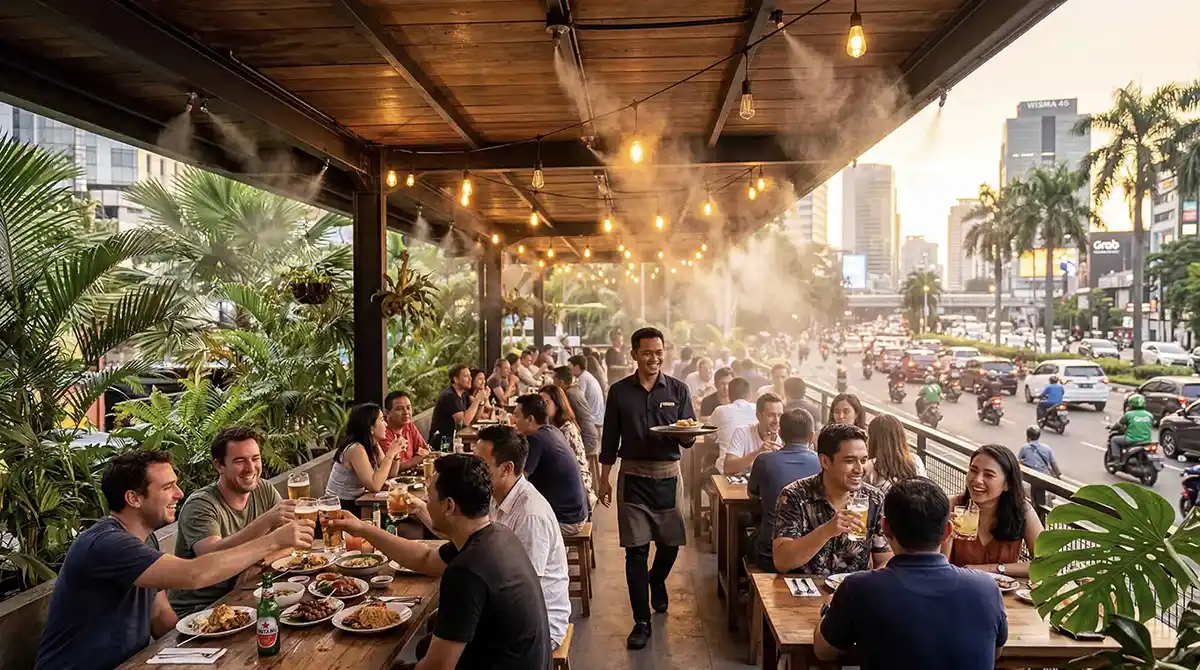
“Instagram cafe Bali” is one of the most searched phrases by tourists planning their trips. For cafe owners, this is not vanity — it is a distribution channel. Every guest who posts a photo of your space is running a free ad campaign to an audience of hundreds or thousands. The cafes that understand this dynamic do not just happen to be photogenic. They are designed for it, intentionally and systematically.
But there is a trap. Plenty of visually stunning cafes in Bali are empty by 2 p.m. because they optimized for the photo and forgot about the experience. The venues that sustain both viral social presence and strong revenue have figured out how to make a space that looks incredible in a photo and feels incredible to sit in for two hours.
The Design Elements That Drive Sharing
After analyzing hundreds of the most-tagged cafes across Bali on Instagram and TikTok, clear patterns emerge in what makes guests reach for their phones.
Greenery and Living Elements
This is the single most common element in Bali’s most-shared cafe content. Not a few potted plants — immersive greenery that creates the feeling of dining inside a garden. Hanging pothos, monstera feature walls, mature frangipani trees growing through the roof structure, and dense tropical planting along pathways.
The key is depth and layering. A flat green wall looks flat in photos. Layered planting at multiple heights — ground cover, mid-height shrubs, overhead canopy — creates dimension that photographs well from any angle.
Natural Light and Shadow Play
The best cafe photos are almost never taken with flash. They rely on natural light, which means the architecture itself needs to create good lighting conditions. Slatted roofing that filters sunlight into stripe patterns on the floor. Open sides that let in golden-hour light. Skylights or canopy gaps that create pools of light on feature tables.
Shadow patterns from bamboo screens, woven rattan panels, and pergola beams add visual texture that flat artificial lighting cannot replicate. Design for how light moves through the space between 8 a.m. and 5 p.m., not just how it looks at noon.
Texture and Material Contrast
Smooth concrete against rough stone. Polished terrazzo next to raw wood. Woven rattan beside brushed metal. Material contrast creates visual interest that makes guests stop and photograph details they might otherwise walk past. Bali’s local craft ecosystem makes this accessible — skilled artisans producing custom concrete, terrazzo, woodwork, and woven elements at a fraction of what the same quality would cost elsewhere.
The “Hero Spot”
Every high-performing Instagram cafe has at least one designed focal point — a swing seat overlooking rice fields, a flower wall, a dramatic staircase, a pool edge table with an infinity view. This is not accidental. It is planned into the layout as deliberately as the kitchen placement.
The best hero spots share three qualities: distinctive visual identity (guests know immediately which cafe the photo is from), good natural lighting, and enough space for guests to photograph without disrupting other diners.
Why the Most-Shared Cafes Invest in Invisible Infrastructure
Here is what does not appear in any Instagram photo but directly determines whether a cafe generates sustained social content or a brief spike followed by declining visits: guest comfort.
A guest who is sweating, squinting in harsh light, or being bothered by heat is not going to linger over a beautifully plated acai bowl arranging the perfect shot. They are going to eat quickly and leave. The cafes that generate the most organic content create conditions where guests are relaxed enough to enjoy the space — and relaxed guests take more photos, stay longer, and order more.
Cooling is the invisible multiplier. When Bali’s midday temperature hits 34 degrees and your outdoor terrace still feels pleasant, guests stay an extra 30-45 minutes. That is time they spend photographing their food, the space, themselves — and posting it. A comfortable guest with good lighting and an interesting background is a content creation machine.
High-pressure mist cooling systems deliver this without any visual intrusion. The mist lines mount along existing pergola beams or canopy edges and the nozzles are nearly invisible. There is no bulky HVAC equipment disrupting your carefully designed aesthetic. The 10-micron droplets evaporate before reaching table level, so there is no moisture on food, phones, or camera lenses. The space just feels cooler.
For a typical cafe terrace of 60-100 square meters, a MistPro 200 system (Rp 16,900,000) handles the coverage. Daily energy cost is under Rp 5,000. The return is measured in both direct revenue from longer visits and indirect revenue from organic social exposure.
Not sure what fits your space?
Send a photo of the area on WhatsApp — we’ll size the system and send a quote within a day. 600+ installations across Indonesia.
Practical Layout Tips for Photo-Friendly Spaces
Create Multiple “Rooms” Without Walls
Use level changes (even 15-20 cm steps), planting, material transitions, and lighting shifts to create distinct zones within a single space. Each zone becomes a different photo opportunity with a different character. A sunlit terrace zone, a shaded garden nook, a moody interior corner — three settings, one venue, three different Instagram posts.
Design Sightlines, Not Just Seating
Before finalizing your layout, stand at every table and photograph what guests will see. Some of the best cafe photos are not of the space itself but of the view from a specific seat. A table positioned to frame a rice field view between two palm trunks is worth more in social reach than the most expensive interior finish.
Make Food Photography Easy
Ensure tables receive consistent, diffused natural light during peak dining hours. Avoid tables in deep shadow or harsh direct sun — neither photographs well. Table surfaces matter: natural wood, terrazzo, and matte concrete photograph better than reflective glass or plastic laminate. Leave enough clear table space for guests to arrange flat-lay shots.
Design for Video, Not Just Photos
TikTok and Reels now drive more cafe discovery than static Instagram posts. This means designing for movement — walking paths that reveal the space progressively, transitions between zones that feel cinematic, and details that reward a slow pan rather than a single click. Sound matters too: the ambient soundscape (water features, music, tropical birds) becomes part of the content.
The Revenue Connection
An Instagram-worthy design is not a marketing cost. It is a revenue driver with measurable returns:
- Organic reach replaces paid advertising. Cafes that generate 50+ tagged posts per week are receiving the equivalent of thousands of dollars in exposure at zero media cost.
- Higher average ticket. Guests visiting a “destination cafe” spend 20-35% more than those at a generic venue, because the experience itself is the product.
- Repeat visits from locals. In Bali’s competitive cafe market, the venues that locals return to are the ones that offer a genuinely comfortable, beautiful environment — not just good coffee.
The cafes that sustain their Instagram relevance over years, not months, are the ones where the experience matches the photo. Beautiful design gets guests through the door. Comfort, cooling, and service quality keep them there long enough to become advocates.
Getting Started
If you are designing a new cafe or refreshing an existing one, start with these priorities in order: natural light and shade architecture first, greenery and material palette second, furniture and hero spot placement third, and invisible infrastructure — cooling, acoustics, drainage — woven in throughout.
For outdoor and semi-outdoor spaces in Bali’s climate, mist cooling is the most effective way to keep guests comfortable without compromising the open-air aesthetic that drives social sharing. MistSystem has installed cooling for 400+ venues across Bali, including cafes, restaurants, beach clubs, and hotels.
Discuss your space with our team: +62 851 9029 1717
Ready to cool your venue?
Chat on WhatsApp