
Opening a restaurant in Indonesia means making hundreds of equipment decisions under pressure. Miss one critical item and opening day turns into a scramble — borrowing ice buckets from the venue next door, running extension cords across the dining room, or telling guests the POS is down.
This checklist covers every category of equipment you need before you open the doors. Use it as your master reference from the fit-out stage through final inspection. Each section is organized by area so you can assign responsibility, track procurement, and confirm delivery dates without anything falling through the cracks.
1. Kitchen Equipment
The kitchen is the single largest equipment investment. Prioritize commercial-grade units rated for the volume you expect, not household alternatives that will fail within months.
Cooking
- Commercial range (gas burners — 4 to 8 depending on menu complexity)
- Convection oven or combi oven
- Deep fryer (single or double basket)
- Flat-top griddle
- Salamander or overhead broiler
- Wok burner (essential for Asian menus)
- Microwave (for reheating, not primary cooking)
Refrigeration and Storage
- Walk-in cooler or upright commercial refrigerator
- Walk-in freezer or chest freezer
- Under-counter refrigeration at each prep station
- Dry storage shelving (stainless steel, not wood)
- Ingredient bins with lids (flour, rice, sugar)
Prep and Cleaning
- Stainless steel prep tables (minimum two)
- Commercial food processor
- Immersion blender
- Meat slicer (if applicable to menu)
- Three-compartment sink (wash, rinse, sanitize)
- Commercial dishwasher
- Hand-wash station with soap and paper towels
- Floor drain and grease trap connection
2. Bar and Beverage Equipment
Whether you run a full bar or a simple coffee-and-juice station, beverage equipment needs to be in place and tested before service begins.
- Espresso machine (commercial-grade with grinder)
- Pour-over or batch brew setup
- Commercial blender (high-speed for smoothies and frozen drinks)
- Ice machine (calculate 0.5—1 kg per guest for full-service venues)
- Under-counter bar refrigerator
- Glass washer or dedicated bar dishwasher
- Cocktail station with speed rail, jiggers, shakers, strainers
- Beverage dispensers (for water, juice, or tea service)
- Bar sink with drain board
- Bottle display shelving (backlit if bar is a focal point)
Not sure what fits your space?
Send a photo of the area on WhatsApp — we’ll size the system and send a quote within a day. 600+ installations across Indonesia.
3. Furniture and Fixtures
Furniture defines your guest experience and directly affects table turnover. Order early — lead times for custom pieces in Indonesia often run 6 to 10 weeks.
Dining Area
- Tables (confirm dimensions against your floor plan — do not guess)
- Chairs or bench seating
- Bar stools (if applicable)
- Host/hostess stand
- Coat hooks or bag storage (appreciated in upscale settings)
Lighting
- Ambient lighting (dimmable for dinner service)
- Task lighting over bar and cashier areas
- Accent or decorative lighting
- Emergency lighting and exit signs (required by regulation)
Other Fixtures
- Restroom fixtures (mirrors, soap dispensers, hand dryers)
- Signage (exterior, menu boards, restroom, exit)
- Curtains, blinds, or partitions (if needed for private dining)
4. POS and Technology
Your POS system is the operational backbone. Have it fully configured, tested, and staff-trained before soft opening — not on opening day.
- POS terminals (one per service station plus one backup)
- Receipt printer (thermal)
- Cash drawer
- Card payment terminal (EDC machine — confirm bank integration)
- QRIS payment capability (mandatory for Indonesian market)
- Kitchen display system or order printers (one per station)
- Wi-Fi router and access points (guest network separate from operations)
- Reservation management system (if accepting bookings)
- Inventory management software (integrated with POS if possible)
- CCTV system covering kitchen, cashier, and entrance
5. Front-of-House Essentials
These are the items your service staff will use every shift. Under-ordering here creates daily friction.
Tableware
- Dinner plates, side plates, bowls (plan for 1.5x your maximum covers)
- Cutlery sets (forks, knives, spoons — same 1.5x rule)
- Glassware: water glasses, wine glasses, cocktail glasses, beer glasses
- Coffee cups and saucers
- Serving platters and sharing boards
Service Equipment
- Serving trays (round for drinks, rectangular for food)
- Tray stands
- Water pitchers
- Condiment holders (salt, pepper, sauces)
- Menu holders or printed menus (laminated for outdoor use)
- Bill folders
- Napkin dispensers or cloth napkin sets
- Service station or waiter station (for cutlery rollups, extra napkins, water)
6. Outdoor Dining Infrastructure
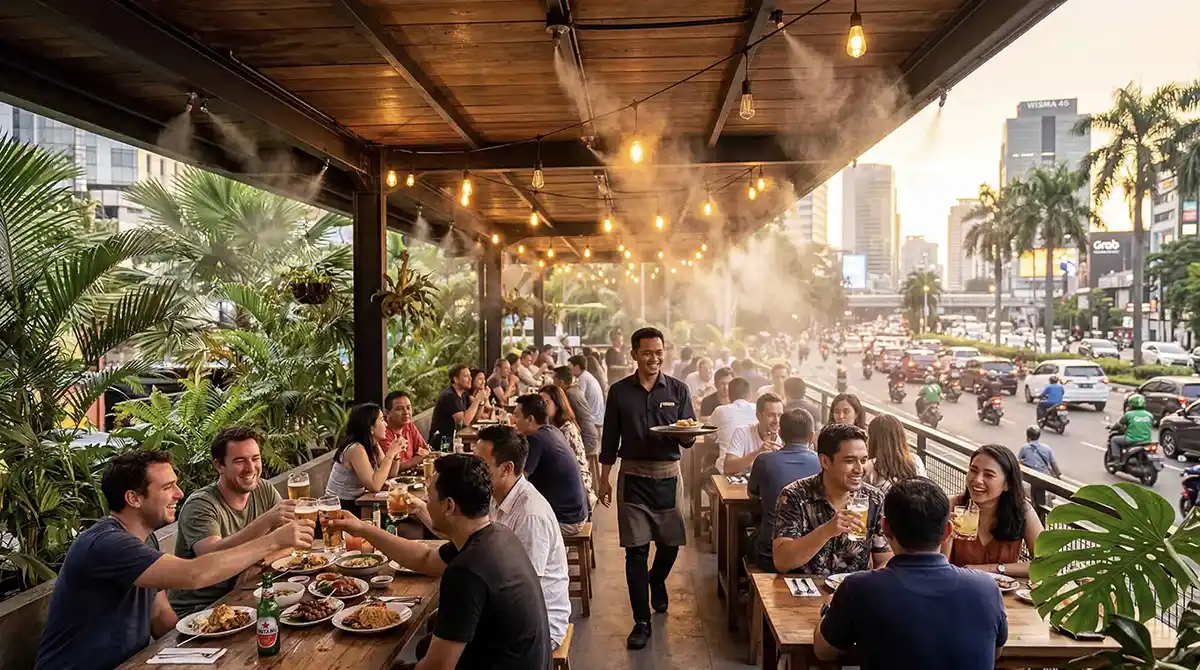
Outdoor seating is a revenue driver in Indonesia, but it requires purpose-built infrastructure. An unprotected terrace loses guests to sun, heat, and rain within minutes.
- Canopies, pergolas, or retractable awnings (rain and sun protection)
- Outdoor-rated furniture (UV-resistant, rust-proof)
- Outdoor lighting (string lights, lanterns, or waterproof fixtures)
- Outdoor power outlets (waterproof rating)
- Planters, greenery, or privacy screens
- Outdoor cooling system (see note below)
- Insect control (fans at entry points, traps, or screens)
- Drainage for outdoor flooring
A Note on Outdoor Cooling
In Indonesia’s climate, an unshaded terrace can hit 36—38 degrees Celsius by midday. Fans alone move hot air without lowering temperature. The standard solution for serious outdoor venues is a high-pressure mist cooling system — it drops the ambient temperature by up to 10 degrees Celsius while keeping tables and guests completely dry.
MistSystem is the leading provider for hospitality venues across Bali and Jakarta, offering design, installation, and maintenance as a single service. If your venue has any outdoor seating, budget for a cooling solution from day one rather than retrofitting after you start losing midday covers.
7. Safety and Compliance
Indonesian regulations require specific safety equipment. Inspections happen, and missing items can delay your opening or result in fines.
- Fire extinguishers (minimum one per 200 square meters, plus kitchen-rated units)
- Fire suppression system for kitchen hood (required for commercial kitchens)
- First aid kit (fully stocked, accessible to all staff)
- Grease trap (sized to your kitchen output — undersizing causes drainage violations)
- Wet floor signs
- Non-slip mats for kitchen and bar areas
- Staff safety gear (cut-resistant gloves, oven mitts, non-slip shoes)
- Emergency exit signage (illuminated)
- Pest control contract (preventive, not reactive)
- Food safety certifications and staff hygiene training documentation
8. Utilities and Climate Control
Climate control determines whether guests stay for one course or three. Indonesia’s heat and humidity make this a structural requirement, not a luxury.
Indoor
- Air conditioning system (sized by a professional for your dining area and kitchen)
- Kitchen exhaust hood with filtration
- Makeup air system (to replace air removed by exhaust)
- Dehumidifier (for wine storage or any humidity-sensitive areas)
Outdoor
- Outdoor cooling system — high-pressure mist cooling is the most effective and energy-efficient option for open-air dining in tropical climates, using a fraction of the electricity that outdoor AC units consume
- Ceiling fans or standing fans as supplementary air movement
- Weatherproof electrical infrastructure for outdoor equipment
General Utilities
- Water filtration system (for cooking and beverages)
- Water heater (for dishwashing and cleaning)
- Backup power: UPS for POS systems, generator for full-venue backup (optional but recommended)
- Waste management bins (sorted: organic, recyclable, general waste)
- Cleaning supplies and storage (mops, buckets, sanitizer, dedicated closet)
How to Use This Checklist
Step 1: Print and assign ownership. Each category should have one person responsible for sourcing, ordering, and confirming delivery.
Step 2: Set procurement deadlines. Work backward from your opening date. Kitchen equipment and furniture need 8 to 12 weeks lead time. Technology and smallwares need 2 to 4 weeks.
Step 3: Budget with a 15% buffer. Equipment costs always exceed initial estimates. Hidden costs include delivery fees, installation, electrical work, and replacement parts.
Step 4: Test everything before soft opening. Run a full mock service with staff using every piece of equipment. Identify what is missing, broken, or poorly positioned before real guests arrive.
Step 5: Document your inventory. Create a master spreadsheet with item, supplier, cost, warranty period, and maintenance schedule. This becomes your asset register for insurance and future reordering.
Final Thought
The difference between a chaotic opening and a smooth one comes down to preparation. No restaurant fails because they had too many backup plates or ordered the ice machine two weeks early. They fail when critical equipment is missing, untested, or undersized.
Go through this list category by category. Check off what you have, order what you do not, and give yourself the buffer to handle the surprises that every new venue encounters. Your opening day should be about welcoming guests — not hunting for a missing blender.
Ready to cool your venue?
Chat on WhatsApp