
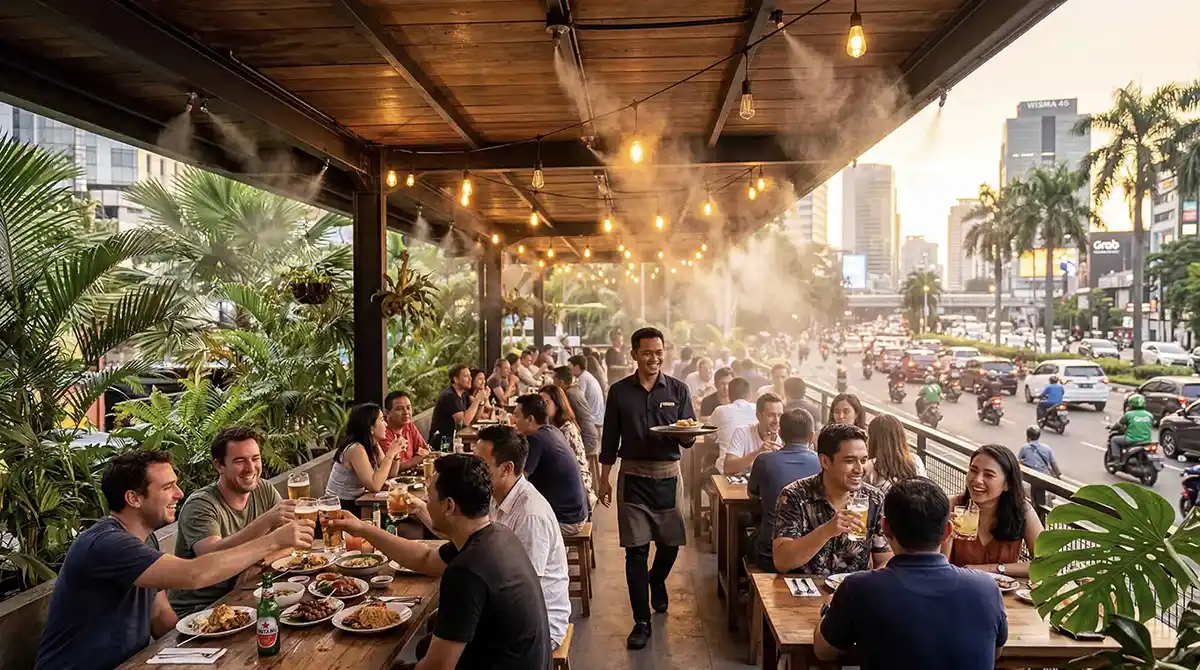
Outdoor dining is not optional in Indonesia’s hospitality market — it is expected. Guests choose venues with open-air terraces, garden seating, and rooftop spaces, especially in Bali, Jakarta, and Yogyakarta. But designing outdoor space for tropical climates is fundamentally different from temperate regions. Heat, humidity, sudden rain, and intense UV exposure destroy materials, drive away guests, and inflate maintenance costs when the design gets it wrong.
This guide covers the practical decisions that determine whether your outdoor area becomes a revenue engine or an expensive liability.
Layout Planning: Airflow Before Aesthetics
The single most common mistake in tropical outdoor restaurant design is treating layout as a visual exercise. In climates where ambient temperatures reach 33-35 degrees Celsius daily, airflow is the primary design constraint.
Orient seating to capture prevailing winds. In most of coastal Bali, that means opening the south or southwest side of your space. Avoid placing solid walls or dense plantings on the windward side. Use permeable barriers — slatted wood screens, open bamboo weave, or tensile fabric — that provide visual separation without blocking air movement.
Seating Density and Spacing
Tropical heat makes tight spacing unbearable. Allow 15-20 percent more space per cover than you would indoors. A minimum of 90 cm between table edges keeps airflow circulating at guest level. This reduces your total outdoor capacity slightly but increases the percentage of covers that actually get used during peak heat hours.
Position high-turnover tables (two-tops, bar seating) in the breeziest zones. Reserve deeper, more sheltered areas for group tables where guests linger over longer meals.
Materials: What Survives the Tropics
Material selection in tropical climates is a durability decision, not a style decision. The wrong choice means replacement costs within 12-18 months.
What Works
- Teak and merbau hardwoods: naturally resistant to moisture, insects, and UV. Teak weathers to a silver-grey patina that suits most aesthetic directions. Cost is higher upfront but the 15-20 year lifespan makes it the cheapest option per year.
- Bamboo (treated): excellent for structures, ceilings, and decorative elements. Must be treated with borax/boric acid solution to prevent boring insects. Properly treated bamboo lasts 8-12 years in exposed conditions.
- Natural stone (andesite, palimanan): ideal for flooring and surfaces. Stays cooler than tile or concrete in direct sun. Non-slip when textured.
- Stainless steel (316 marine grade): for any metal fixtures, hardware, or structural connections. Standard steel corrodes within months in coastal environments.
What Fails
- Mild steel and iron: rusts aggressively in coastal humidity. Powder coating buys time but not enough.
- MDF and plywood: swells, warps, and delaminates. No amount of sealing prevents tropical moisture penetration.
- Dark-colored metals in direct sun: black steel frames, dark aluminum, or dark tile absorb heat and become too hot to touch by midday. Surface temperatures can exceed 60 degrees Celsius.
Not sure what fits your space?
Send a photo of the area on WhatsApp — we’ll size the system and send a quote within a day. 600+ installations across Indonesia.
Shade Structures: Your First Line of Defense
Without shade, outdoor seating is unusable from 10:00 to 15:00 in most of Indonesia. That is five hours of potential revenue lost every day.
Permanent pergolas with retractable fabric canopies offer the best combination of rain protection and ventilation. The fabric should be marine-grade HDPE or acrylic with UV stabilizers — standard polyester degrades within one season. Leave gaps or openable sections for hot air to rise and escape.
Tensile membrane structures work well for larger areas. They create dramatic visual impact while providing excellent rain coverage. Budget Rp 800,000-2,000,000 per square meter for quality tensile installations including engineering and permits.
Living shade from mature trees is the most effective thermal solution — a large frangipani or ketapang canopy can reduce ground temperatures by 8-12 degrees compared to exposed hardscape. But trees take years to mature and require ongoing maintenance.
Cooling Infrastructure: Design It In, Do Not Bolt It On
The most common failure in outdoor venue design is treating cooling as an afterthought. Owners build a beautiful terrace, open for business, watch guests flee the heat at noon, and then scramble to retrofit fans or cooling systems. The result is exposed wiring, misaligned nozzles, and equipment that fights the architecture instead of complementing it.
Mist Cooling Integration
Commercial mist systems operate at 70 bar pressure, producing 10-micron droplets that evaporate before reaching guests or surfaces. When designed into the structure from the start, the 6mm stainless steel lines run inside or along pergola beams, columns, and ceiling channels. Nozzles mount flush with the structure, virtually invisible.
A MistPro 100 covers up to 60 square meters and costs IDR 15,200,000 — suitable for a compact terrace. For larger spaces up to 150 square meters, the MistPro 200 is IDR 16,900,000. Venues with 300 square meters of outdoor area use the MistPro 300 at IDR 18,900,000.
The temperature reduction of up to 10 degrees Celsius transforms a 34 degree terrace into a 24 degree dining zone. Operating cost runs Rp 2,000-5,000 per day — a fraction of what a single recovered lunch cover generates in revenue.
Ceiling Fans as Complement
Large-diameter ceiling fans (1.5-2.0 meters) mounted under shade structures move air volume that mist alone cannot. They are most effective when paired with mist cooling: the fan distributes the cooled air across a wider area. Mount fans at minimum 2.8 meters above finished floor level to avoid head clearance issues and to move air broadly rather than creating a single focused downdraft.
Rain Protection Without Closing Off
Indonesia averages 150-200 rainy days per year. A space that shuts down every time it rains loses a third of its potential revenue.
Design for three rain scenarios: light drizzle (protect food and guests), moderate rain (keep the space open with some edge tables pulled back), and heavy downpour (graceful closure with minimal disruption). Retractable side screens in clear PVC or weather-rated fabric allow you to seal edges quickly during sudden storms while maintaining visibility and light.
Floor drainage is critical. Slope outdoor surfaces at 1-2 percent grade toward drainage channels. Flat surfaces pool water, create slip hazards, and accelerate material degradation. Install channel drains at the perimeter of covered areas, not in the middle of the dining zone.
Lighting: Extend Revenue Hours
Good outdoor lighting extends your usable hours from sunset through closing and creates the ambiance that makes guests choose your terrace over your air-conditioned interior.
Layer three types: ambient (string lights, lanterns, or recessed ceiling fixtures for overall warmth), task (focused light on tables so guests can read menus), and accent (uplighting on trees, architectural features, or plantings for depth and drama).
Use warm color temperatures between 2700K and 3000K. Cool white light feels clinical in outdoor settings. All fixtures must be IP65 rated minimum for outdoor use in tropical climates. Budget Rp 5-15 million for a professional lighting installation depending on area size.
Putting the Design Together
The best tropical outdoor restaurants share a common design logic: shade first, airflow second, cooling third, materials fourth, and decoration last. Get the first three right and the space works even with basic furniture. Get them wrong and no amount of interior styling fixes the problem.
Plan cooling infrastructure during the architectural phase, not after construction. Run conduit for mist lines, fan wiring, and lighting before walls and ceilings close up. The cost of integrating these systems during construction is 30-50 percent less than retrofitting later.
For a site survey and cooling layout tailored to your venue design, contact MistSystem on WhatsApp: +62 851 9029 1717.
Ready to cool your venue?
Chat on WhatsApp