
What Makes Outdoor Restaurants in Bali Actually Succeed? The Factors Most Owners Miss
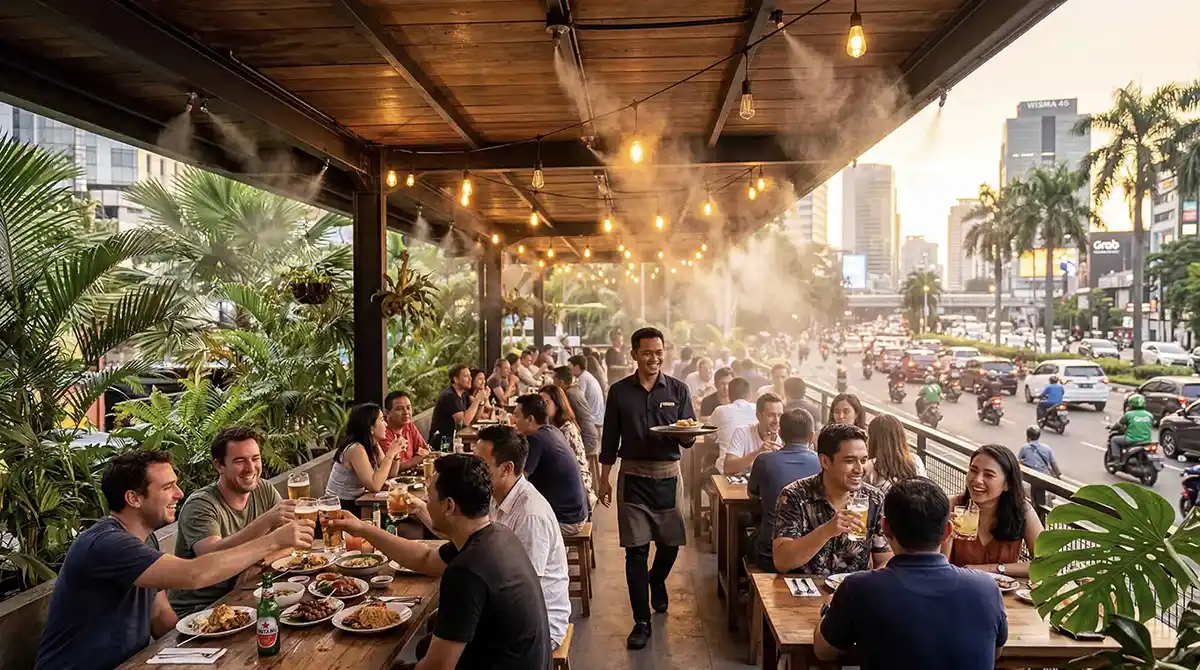
Bali has over 8,000 registered food and beverage venues, and the number grows every year. Most of the highest-performing ones share a common trait: outdoor dining is not an afterthought. It is the main event. From Seminyak’s buzzing sidewalk terraces to Uluwatu’s clifftop restaurants overlooking the Indian Ocean, the venues that fill seats consistently have figured out something that goes beyond good food and a nice view.
This is not a top-ten list. It is an analysis of the specific, measurable factors that separate outdoor restaurants that thrive from those that cycle through owners every eighteen months.
Location Shapes Everything, But Not How You Think
The obvious logic is that high-traffic areas produce high-revenue restaurants. That is partly true — a venue on Jl. Kayu Aya in Seminyak or Jl. Batu Bolong in Canggu benefits from foot traffic that lower-profile locations simply do not get. But some of Bali’s most successful outdoor restaurants are tucked into rice field settings in Ubud, perched on cliffs in Uluwatu, or hidden down side streets in Pererenan.
What actually matters is whether the location enables a compelling outdoor experience. A Canggu main-road venue with a cramped terrace next to motorbike traffic will underperform a quieter Sanur beachfront spot with a spacious garden layout. Nusa Dua resort restaurants thrive on captive hotel traffic and ocean proximity, not walk-ins.
The winning formula is not “best address” but “best match between location and outdoor concept.” A rice-field terrace needs space and view. A Seminyak venue needs energy and foot traffic. Each area rewards a different approach.
Design That Works With the Climate, Not Against It
Bali’s tropical climate is both the greatest asset and the biggest operational challenge for outdoor dining. Midday temperatures regularly exceed 33 degrees Celsius, humidity hovers between 70-85%, and the wet season brings sudden downpours that can empty a terrace in minutes.
The restaurants that stay full through the afternoon have solved three problems simultaneously:
Shade architecture. Not flat awnings that trap heat, but elevated structures — pavilions, pergolas, tension sails — that allow hot air to rise and escape. The best venues use layered shade: a primary roof structure plus secondary canopy from trees or climbing plants.
Rain resilience. Retractable or fixed structures that protect diners without making the space feel enclosed. Drop-down transparent blinds, deep roof overhangs, and strategic seating setback from the terrace edge keep service running through showers.
Material choices. Bamboo, teak, and thatch stay cooler than steel and concrete. The most comfortable outdoor restaurants in Bali use natural materials that do not absorb and re-radiate midday heat back onto diners.
Not sure what fits your space?
Send a photo of the area on WhatsApp — we’ll size the system and send a quote within a day. 600+ installations across Indonesia.
The Invisible Factor: Why Some Terraces Are Full at 2 PM and Others Are Empty
Walk past any restaurant strip in Canggu or Seminyak at 2 p.m. on a hot day. Some terraces are packed. Others, equally attractive in photos, sit nearly empty. The difference is rarely about the menu or the price point. It is about physical comfort.
Guests do not think “this restaurant has good climate control.” They think “it feels nice here.” Or they do not think about it at all — which is exactly the point. The best outdoor venues create an environment where heat is simply not a factor in the dining experience.
This is where active cooling becomes a revenue driver, not an expense. High-pressure mist cooling systems operating at 70 bar with 10-micron droplets can drop ambient temperature by 8-10 degrees Celsius in an open terrace. The mist evaporates before reaching table level, so there is no moisture on guests or food. The effect is a space that feels naturally cool, even in direct tropical conditions.
The revenue math is direct. A 60-seat terrace that empties from 11 a.m. to 4 p.m. loses 30-50 covers per day. At an average ticket of Rp 200,000-350,000 per person, that is Rp 6-17 million per day in lost revenue. A mist cooling system for that space costs Rp 15-17 million total, with daily energy costs of Rp 2,000-5,000. The system pays for itself within days, not months.
Service and Operations That Match the Setting
Outdoor dining creates operational demands that indoor service does not. Tables need more frequent clearing because tropical heat accelerates food spoilage perception. Drinks need ice replenishment. Menus fade and warp in humidity. Cushions and upholstery degrade faster.
The restaurants that handle this well invest in:
- Weather-trained staff who can transition seating during rain without disrupting service
- Durable tableware that handles outdoor conditions (no thin paper menus that wilt)
- Drink service pacing that accounts for faster consumption in warm conditions
- Flexible seating plans that can shift capacity between covered and uncovered zones based on conditions
These sound like operational details rather than strategy. But in practice, they are the difference between a guest who stays for dessert and a second round of drinks (adding Rp 100,000-200,000 to the bill) and one who asks for the check because the experience has become uncomfortable.
What the Numbers Say
Across Bali’s hospitality market, venues with properly cooled outdoor spaces report measurably different performance:
- 15-25% higher average ticket compared to indoor-only venues in the same area
- 30-45 minutes longer average dwell time, which directly correlates with additional drink and dessert orders
- Higher Google and TripAdvisor ratings, specifically in comments mentioning “atmosphere” and “comfortable”
- Stronger afternoon and midday revenue, the time slot where uncooled outdoor venues see the sharpest drop-off
The pattern holds across price points and areas. A casual warung in Sanur benefits from the same dynamic as a fine-dining restaurant in Seminyak: guests who are comfortable stay longer and spend more.
Building the Complete Outdoor Experience
The restaurants that dominate Bali’s outdoor dining scene do not rely on a single advantage. They combine location fit, climate-conscious design, active cooling, strong service, and the kind of ambiance that makes guests forget they are sitting outside in the tropics.
If you are planning an outdoor venue or looking to improve an existing terrace, start with the climate challenge. Solve the heat problem first, and everything else — design, service, guest satisfaction — becomes dramatically easier.
MistSystem has completed over 600 installations across Indonesia, with 400+ in Bali alone, for venues ranging from beach clubs and hotel restaurants to neighborhood cafes. Systems start at Rp 15,200,000 for spaces up to 60 square meters. For where the island’s dining scene is heading next, see the Bali restaurant trends for 2026.
Several venues of this calibre already run our systems — see the Ritz-Carlton Mandapa Ubud case.
Get a site assessment for your venue: +62 851 9029 1717
Ready to cool your venue?
Chat on WhatsApp