
Revenue growth in the food and beverage industry comes down to three fundamental levers: attract more guests, increase spending per guest, or expand the hours and capacity you operate. Every successful revenue strategy touches at least one of these levers, and the best strategies touch two or three at once.
The Indonesian F&B market is intensely competitive. With over 4 million restaurants and cafes across the archipelago, standing out requires more than good food. It demands a deliberate, numbers-driven approach to every aspect of your operation.
Here are 15 strategies that consistently move the needle for restaurant and cafe owners across Indonesia.
1. Optimize Your Menu Engineering
Not every dish earns its place on the menu. Categorize your items into four buckets: high-profit and popular (stars), high-profit and unpopular (puzzles), low-profit and popular (workhorses), and low-profit and unpopular (dogs). Cut the dogs immediately. Reposition puzzles with better descriptions, photos, or server recommendations. Limit your menu to 30-40 items maximum. The result is faster kitchen throughput, less food waste, and a natural push toward your highest-margin plates. Review this analysis quarterly as ingredient costs and customer preferences shift.
2. Increase Average Check with Upselling Training
Upselling is not about pressure. It is about training staff to make relevant suggestions at the right moment. A server who says “would you like to add our smoked chili sambal for 15k?” after a main course order adds revenue without friction. Create a simple playbook: one appetizer suggestion per table, one drink upgrade, one dessert mention before clearing mains. Track average check per server weekly. The best-performing staff can increase check sizes by 20-30 percent with consistent, natural upselling habits.
Not sure what fits your space?
Send a photo of the area on WhatsApp — we’ll size the system and send a quote within a day. 600+ installations across Indonesia.
3. Launch a Weekday Lunch Promotion
Most restaurants see 60-70 percent of their revenue concentrated on Friday through Sunday evenings. That means your kitchen, rent, and staff costs run five days to earn three days of real income. A structured weekday lunch set menu at an attractive price point fills seats during dead hours without cannibalizing your premium dinner revenue. Target the office crowd, remote workers, and expat residents who eat out daily but choose on price during the week. Promote it on Google Maps and local delivery apps with a clear “weekday lunch from Rp 55k” message.
4. Add Delivery and Takeaway Channels
If you are not on GoFood, GrabFood, and ShopeeFood, you are leaving revenue on the table. But do it strategically. Create a delivery-specific menu that travels well and maintains quality. Price delivery items 15-20 percent higher to offset platform commissions. Invest in proper packaging that keeps food at temperature. Consider launching your own WhatsApp ordering for repeat customers to avoid commission fees entirely. Delivery can add 15-25 percent to total revenue without requiring additional seating capacity.
5. Unlock Your Outdoor Seating Potential
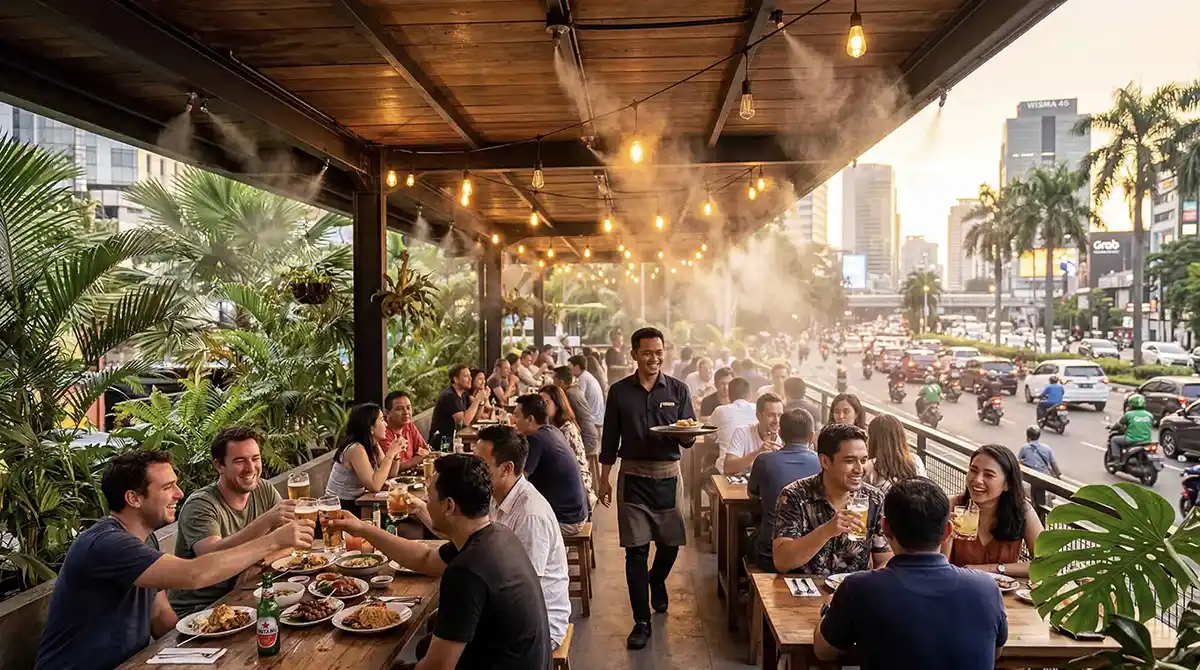
If 30-40 percent of your floor plan is outdoor but generates only 10-15 percent of your revenue because guests avoid the heat, you have a fixable revenue leak. Commercial mist cooling systems drop outdoor temperatures by up to 10 degrees Celsius, making terraces comfortable year-round. The mist evaporates before reaching tables, so guests and surfaces stay dry.
Many venues in Bali and Jakarta report outdoor revenue doubling within the first month after installation. The economics are straightforward: a mist cooling system from MistSystem typically pays for itself in 2-3 months of recovered outdoor covers. This turns an underperforming asset you already pay rent on into a reliable revenue zone, especially during lunch hours when heat drives guests indoors or to competitors with climate-controlled spaces.
6. Extend Operating Hours into the Lunch Peak
Many restaurants in Indonesia open at 11:00 or even 12:00, missing the 11:30-13:00 lunch rush entirely. If your location has foot traffic or nearby offices, opening by 11:00 with a ready kitchen captures the early lunch crowd. This is pure incremental revenue using staff and ingredients you already have. Analyze your location’s foot traffic patterns before committing, but for most urban and tourist-area venues, the lunch window is underserved and high-margin with the right set menu approach.
7. Create Instagram-Worthy Presentation
In Indonesia, the camera eats first. Dishes that photograph well generate free marketing every time a guest posts. This does not require expensive plating. A signature drink in a distinctive glass, a dessert with a dramatic smoke element, or a colorful nasi campur arrangement on a wooden board all create shareable moments. Invest in one or two hero items designed specifically for social content. Add your Instagram handle to table cards. User-generated content from happy guests is the highest-trust advertising channel available to any restaurant.
8. Build a Loyalty and Repeat Customer Program
Acquiring a new guest costs five to seven times more than retaining an existing one. A simple stamp card, a WhatsApp broadcast list with monthly offers, or a birthday program keeps your venue top of mind. The most effective loyalty programs in Indonesia are straightforward: visit ten times, get a free meal. Collect phone numbers at every transaction and segment your list by visit frequency. Send personalized offers to guests who have not visited in 30 days. Retention is where margins compound.
9. Host Private Events and Group Bookings
Private events deliver predictable, high-margin revenue. A set menu with minimum spend removes uncertainty from the kitchen. Offer your space for corporate lunches, birthday celebrations, wedding rehearsals, and community gatherings. Create two or three event packages at different price points with clear inclusions. List your venue on event booking platforms and build relationships with wedding planners and corporate event organizers. Even one private event per week at Rp 5-15 million changes your monthly revenue picture significantly.
10. Partner with Tourism Platforms
For venues in tourist areas like Bali, Yogyakarta, or Jakarta, listing on Klook, GetYourGuide, and TripAdvisor Experiences opens a channel to travelers actively looking to spend. Create a bookable dining experience rather than just a restaurant listing. A “Balinese cooking class with lunch” or “sunset dinner with live music” commands premium pricing and appears in tourist search results. Commission rates run 15-20 percent, but these are guests who would never have found you otherwise. Track the conversion rate and optimize your listing photos and descriptions monthly.
11. Seasonal Menus That Drive Urgency
Limited-time offerings create urgency and give repeat guests a reason to return sooner. Tie menus to Indonesian seasons, holidays, or ingredient availability. A durian season menu, a Ramadan iftar special, or a rainy-season comfort food collection all give you a marketing hook and a reason to reach out to your database. Run each seasonal menu for 4-6 weeks maximum. Announce it across social channels and WhatsApp broadcasts. Scarcity, even manufactured scarcity, accelerates purchase decisions.
12. Google Maps Optimization for Walk-In Traffic
Google Maps is the single most important discovery channel for restaurants in Indonesia. Ensure your listing has accurate hours, a current menu, professional photos, and at least 50 reviews. Respond to every review within 24 hours. Post Google updates weekly with food photos and current promotions. Use relevant keywords in your business description: “rooftop restaurant Seminyak” or “best seafood Canggu.” Venues that actively manage their Google Maps profile consistently outperform competitors with better food but weaker online presence. This is free traffic. Treat it like your most important marketing channel.
13. Staff Training on Guest Experience
Revenue follows experience. A guest who feels genuinely welcomed spends more, stays longer, and returns sooner. Train staff on three fundamentals: greet within 30 seconds, check in after the first course, and thank by name if possible. Empower servers to resolve complaints immediately with a complimentary drink or dessert rather than escalating to management. The cost of one free dessert is nothing compared to losing a guest and their negative review. Schedule 30-minute training sessions weekly. Consistency in service quality is a competitive advantage most restaurants underinvest in.
14. Dynamic Pricing for Peak vs Off-Peak
Airlines and hotels have used dynamic pricing for decades. Restaurants can apply the same logic on a simpler scale. Offer a 10-15 percent discount or a free side dish during your slowest hours to shift demand. Conversely, consider modest price increases during peak Saturday dinner service when demand exceeds capacity. Happy hour pricing for drinks between 15:00 and 17:00 fills an otherwise empty bar. The key is transparency: display your off-peak offers clearly so guests self-select into the time slots that benefit your capacity utilization.
15. Reduce Waste and Food Cost Percentage
Revenue means nothing if your food cost creeps above 35 percent. Track waste daily by station. Implement portion control with standardized recipes and prep scales. Negotiate with suppliers quarterly and compare pricing across at least three vendors for your top 20 ingredients. Use FIFO inventory management religiously. Repurpose trim and off-cuts into stocks, sauces, and staff meals. A one-percent reduction in food cost on Rp 500 million annual revenue drops Rp 5 million straight to your bottom line. This is not glamorous work, but it is where profitable restaurants separate from busy-but-broke ones.
Putting It All Together
No single strategy will transform your business overnight. The restaurants that grow consistently are the ones that execute five or six of these strategies simultaneously and measure the results weekly. Start with the ones that require the least investment and have the fastest payback: menu engineering, upselling training, and Google Maps optimization cost almost nothing to implement.
For strategies that require capital, like outdoor cooling or a loyalty platform, calculate the payback period before committing. The best investments pay for themselves within 90 days and continue compounding returns for years.
Revenue growth in the Indonesia F&B market is available to operators who approach it systematically. Pick your first three strategies from this list, set measurable targets, and review progress in 30 days. Then add the next three.
Ready to cool your venue?
Chat on WhatsApp